Why We Practice Streamline in Swim Lessons
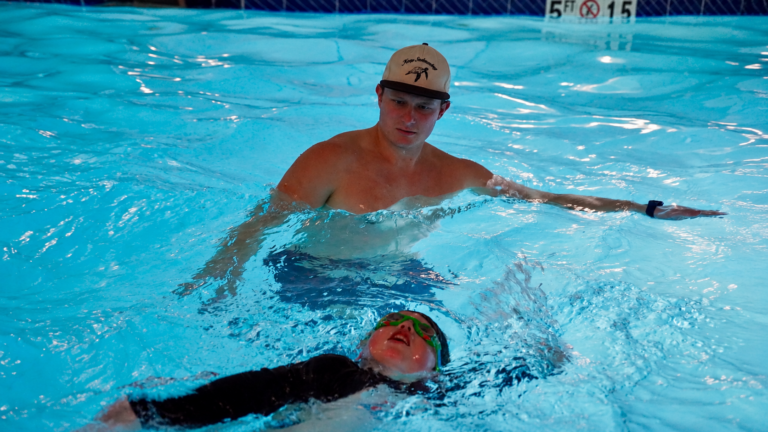
If you’ve watched your child glide from the pool stairs with their hands together and their arms reaching forward, you’ve seen them practice streamline. At Swim & Play Nashville, we spend time on this skill because it helps swimmers learn how to keep their balance and move through the water with less resistance.
Streamline involves the whole body. During a front glide, the head stays between the arms, and the hips and legs follow behind. When the body stays in one long, nearly level line, a similar push can carry the swimmer a little farther. Practicing that position also gives them something familiar to come back to as they add a kick or begin learning a stroke.
From floating to gliding
Natural buoyancy is the upward push of the water that helps support your child’s body. Breathing, relaxation, and body position all affect how a swimmer floats. One child’s legs may stay near the surface, while another’s may rest a little lower. We help each swimmer learn how their own body feels in the water and what helps them find their balance.
Floating lets children feel that support while they’re still. A short glide from the stairs lets them explore that same balance while they’re moving. In Beginner 1, we practice both a front glide in streamline and a streamline glide with kicks. First, swimmers get a feel for the position. Then they practice keeping that position steady while their legs move.
How stair glides help swimmers develop a sit dive
A sit dive is an instructor-guided entry that begins from a seated position and continues into a glide. The streamline shape is familiar from practicing at the stairs. What changes is how the swimmer gets moving. A stair glide begins with a push off the step. In a sit dive, gravity helps the swimmer pick up speed as they move forward and down into the water. That entry brings a quick rush of water against their hands, arms, and face.
That rush can feel new even to a child who’s already comfortable putting their face in the water. During a stair glide, they’re already in the water as they push away. In a sit dive, the sensation comes all at once as they enter and move into the glide. With practice at their own pace, swimmers begin to recognize that feeling and know what to expect. You might see them hesitate less before entering or keep their arms extended as they settle into the glide.
What to watch for at your child’s next lesson
Watch the first few moments after your child leaves the stairs or enters the water with their instructor. Do their hands stay together a little longer? Do their legs follow more smoothly behind them? Can they start kicking while keeping their body steady?
As the feeling of water moving past their face and arms becomes more familiar, your child can give more attention to their balance, kick, and arm movements. A smoother glide or a more comfortable entry may look like a small change from the pool deck. It’s one way to see your swimmer building the confidence and control they’ll use as they learn to swim independently.
A steadier glide is one of many small signs of progress you can spot from the pool deck. Read more about how to tell if your child is making progress in swim lessons.