What Should Your Child Wear to Swim Lessons?
A guide to goggles, swimsuits, and swim gear
Swim lessons are for learning new skills—not wrestling with a leaky pair of goggles. A comfortable suit, a clear view, and hair out of the way give your swimmer fewer things to fuss with and more room to focus.
Start with a few well-fitting basics. An expensive shopping list is not required!
Start With Goggles That Actually Fit

Choose goggles that seal comfortably around the eyes without pinching the nose or needing an overly tight strap. Price and brand cannot tell you how well a pair will fit your child.
Try them on before lesson day. Gently press the eye cups into place without the strap: a brief seal is a useful starting check, not a promise of a leak-free swim. Add the strap, check comfort, and follow the model’s fitting instructions.
If they leak, check positioning and size before tightening again. Frequent interruptions take valuable teaching time away from your swimmer and the other swimmers in the class.
Goggle Styles We Do Not Recommend for Lessons
At Swim & Play, we recommend simple goggles with two eye cups and an uncovered nose as a starting point for lessons. Here is what we would steer families away from and why.
Oversized eye masks: A larger frame may be difficult to fit to a small face. A fabric strap is not automatically a problem, and a wide mask does not automatically leak. The question is whether it stays secure and comfortable while your child swims.
Nose-covering masks: These cover the part of the face swimmers need to use when practicing bubbles through the nose. Choose goggles that leave the nose uncovered for those lesson skills.
Tinted and mirrored lenses: Tinted goggles are not always the best choice indoors. Dark tints and many mirrored lenses reduce brightness, which can make the water and surroundings look darker.
For a child who already feels scared, a dimmer view may add to that uneasiness and compound their fear. At Swim & Play, we want to build comfort and confidence—not add another obstacle to feeling comfortable in the water.
Clear lenses are our starting recommendation for indoor lessons, especially for nervous beginners. Not every tint has the same effect; the lens and pool lighting both matter.
Extra accessories: Dangling earplugs and nose clips can add things to manage. Discuss individual needs with the instructor rather than adding accessories just because they come in the box.
For more about how different lenses affect brightness and visibility, see Speedo’s goggle lens guide.
Goggle Options to Compare
These links show models you may want to compare. Check the exact size and lens before buying: an adult pair is not a junior pair, and optical goggles are intended for vision correction.
Use the mirrored listing to compare lens styles, rather than as our default indoor recommendation. Whichever model you choose, comfort and fit come first.
Choose a Swimsuit Made for Swimming
Give the suit a movement test: reach up, bend, and practice a few kicks. It should stay in place without digging in or restricting movement.
Athletic one-pieces, fitted trunks, briefs, and jammers can all work. Very loose shorts or shirts can billow and create extra drag. If your swimmer prefers more coverage, choose a fitted, swimming-specific rash guard.
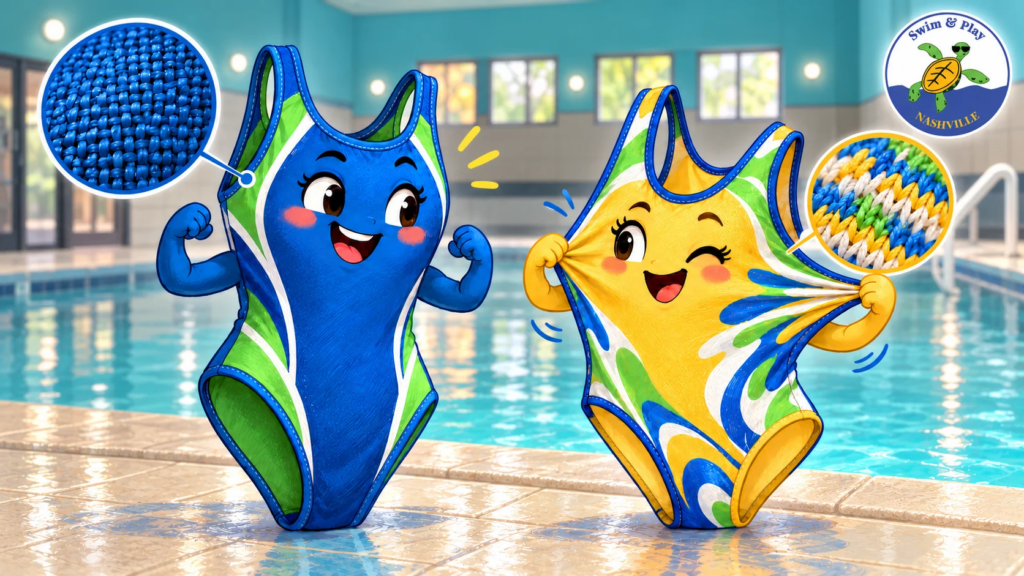
For frequent pool use, look for a suit described as chlorine resistant.
- Polyester/PBT training blends are one option for regular pool use. PBT is a type of polyester.
- Nylon/elastane blends can feel soft and stretchy, and some use chlorine-resistant elastane.
Durability depends on the actual blend, construction, use, and care—not just the fiber name. Read the label, then choose the suit your swimmer can move in comfortably.
A suit that stays put beats one that needs fixing after every jump!
For a fabric example, see the composition of Speedo’s polyester and PBT training suit.
Keep Hair Out of the Way
Hair should be secured away from the face before class. A hair tie may do the job; a swim cap can help contain longer hair. Choose one your swimmer can wear comfortably.
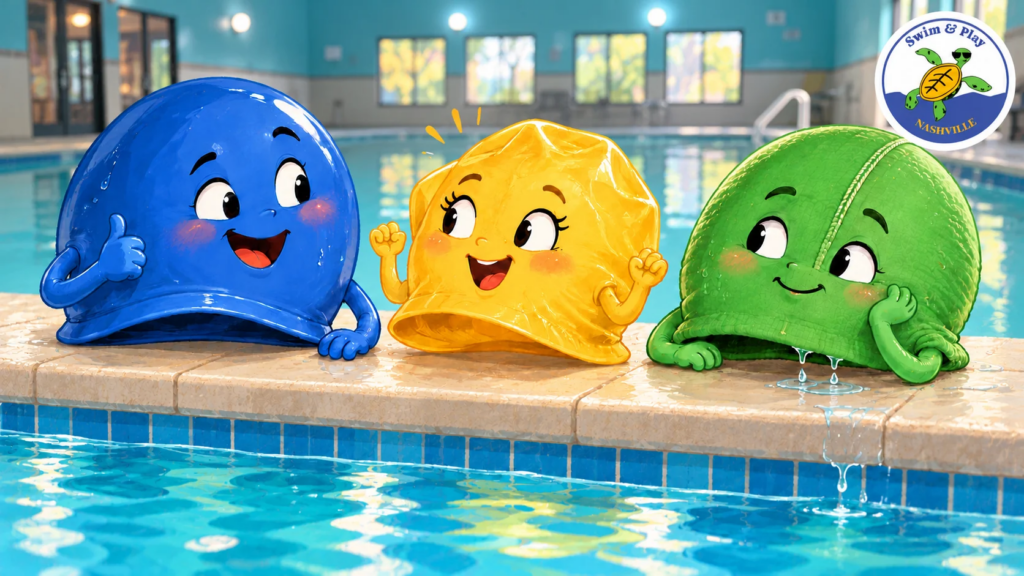
Silicone caps are durable and generally gentler on hair than latex. A long-hair design offers extra room when needed.
Latex caps are thin and lightweight but can pull at hair. Avoid them for swimmers with latex sensitivity.
Fabric caps feel soft and help control hair, but let water through.
No cap guarantees dry hair. Practice putting it on before lesson day so the first attempt does not become a poolside tug-of-war.
For more about materials and fit, see Decathlon’s swim cap guide.
Care for Gear After Indoor Swimming
The pool may be indoors, but your gear still needs an after-swim routine: rinse, dry, then repack.
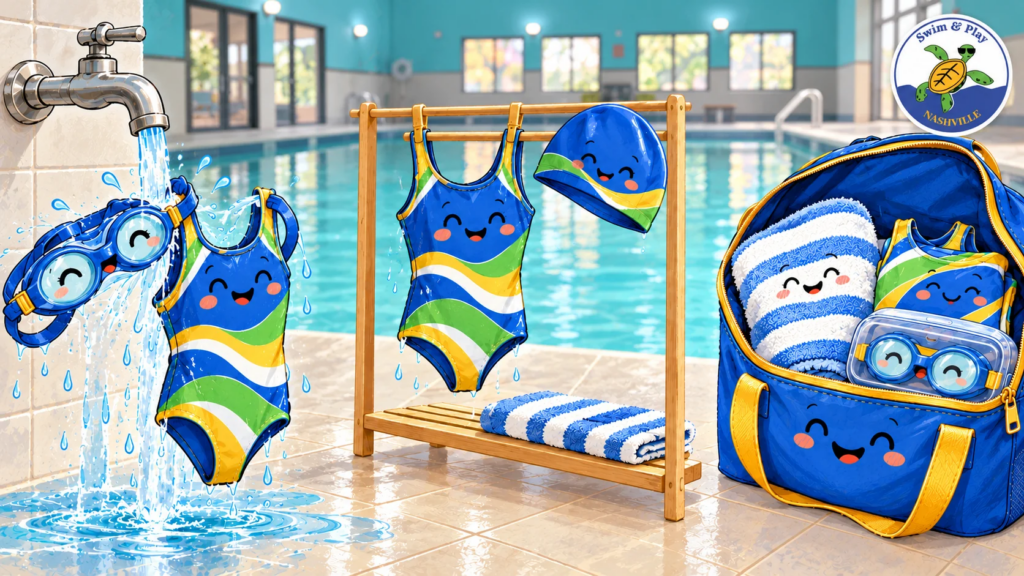
Swimsuits: Rinse with fresh cool water and follow the care label. Dry in the shade away from direct heat. Empty the wet bag promptly instead of leaving the suit bundled in a damp towel.
Goggles: Rinse gently with fresh cool water, avoid rubbing the inside lenses, and let them air dry before putting them in a protective case or pouch. Rubbing can damage anti-fog coatings.
Swim caps: Rinse and dry according to the manufacturer’s instructions.
You can find additional care guidance in Speedo’s swimwear care guide and goggle care guide.
Pack the Essentials
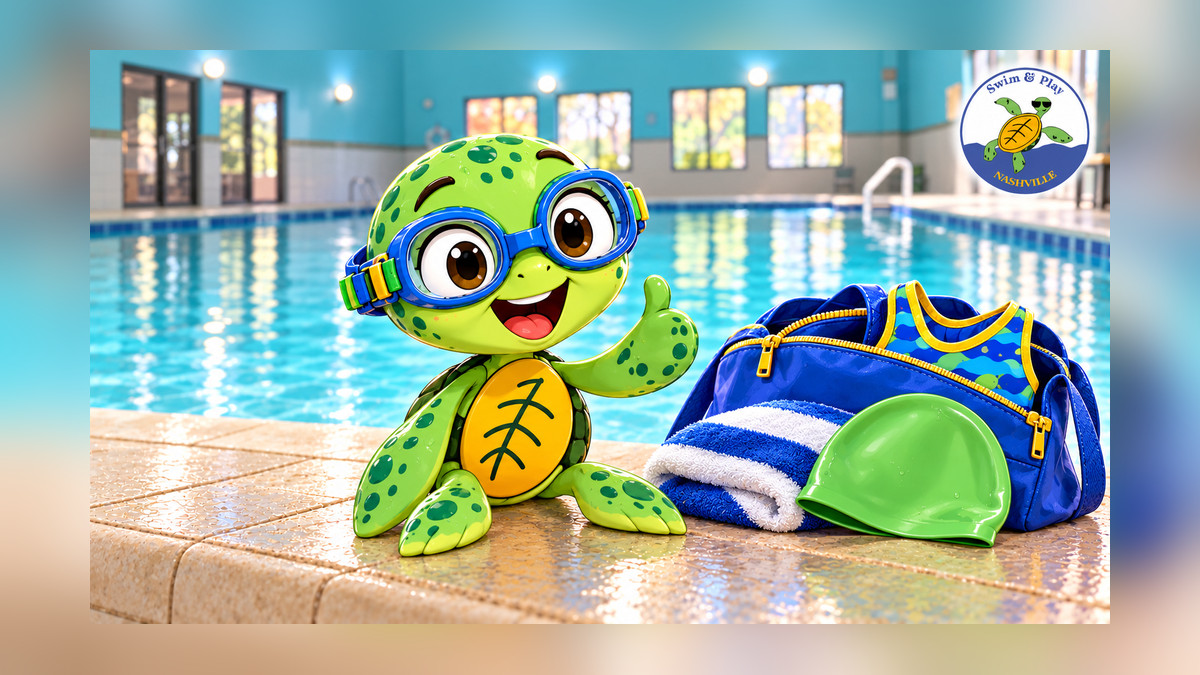
Keep the lesson bag simple:
- A securely fitting swimsuit
- Comfortable goggles
- A towel
- Dry clothes
- A water bottle
- A hair tie or swim cap when needed
Check any additional requirements with your lesson location.
Arrive Comfortable and Ready to Learn
The best lesson gear is the gear your swimmer does not have to think about.
If something pinches, slips, or gets in the way, ask your Swim & Play instructor for help with fit and lesson suitability. Fewer equipment battles leave more time for the good part: swimming!